Watercolor Mandala Pattern Sublimation: A Designer's Guide
When you first encounter a set like the Watercolor Mandala Pattern Sublimation collection, it’s easy to get lost in the immediate visual impact. These aren’t just static geometric shapes; they are digital assets infused with the organic, fluid energy of watercolor. The blend of intricate, symmetrical mandala structures with the soft, bleeding edges of watercolor pigment creates a specific aesthetic that feels both ancient and contemporary. For creative professionals, this isn't merely decorative—it is a strategic tool for conveying mindfulness, spirituality, and artistic sophistication in branding and design projects.
The Visual Language: Beyond Standard Clipart
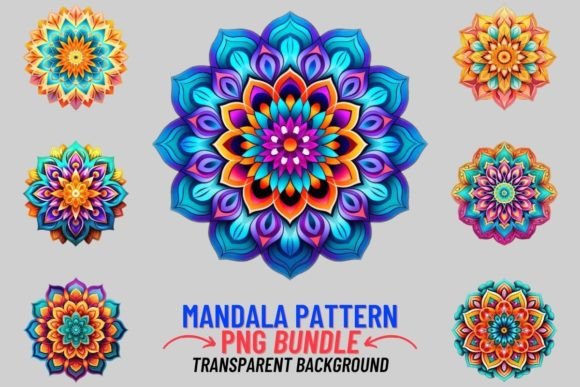
The core appeal of these specific design assets lies in their texture. A standard vector mandala can often feel clinical or overly rigid. In contrast, a Watercolor Mandala Pattern Sublimation file captures the "happy accidents" of paint—where colors bleed into one another, creating gradients that are impossible to replicate mathematically. The visual personality is warm, inviting, and deeply tactile. The colors are rich and saturated, which is essential for high-resolution outputs. Because these files are typically created at 300 DPI and sized up to 4096x4096 pixels, they offer the versatility required for both digital screens and physical prints.
Understanding the composition helps in utilizing them effectively. The mandala form itself represents wholeness and unity, while the watercolor style softens the edges, making the imagery accessible rather than intimidating. This combination is powerful for brands that want to project a calm authority. It suggests a brand identity that values detail and artistic craftsmanship over sterile minimalism.
Strategic Applications for Modern Brands
For entrepreneurs and marketers, the utility of Watercolor Mandala Pattern Sublimation extends far beyond simple scrapbooking. These assets are heavy hitters in the world of visual hierarchy and brand recognition. Because they are high-resolution PNG files with transparent backgrounds, they can be layered onto complex compositions without the hassle of clipping masks or messy edges.
Consider the world of packaging design. A small business selling organic teas, yoga supplies, or artisanal soaps needs packaging that communicates "natural" and "holistic" before the customer reads a single word. Placing a watercolor mandala as the central focal point on a label immediately establishes that tone. It serves as a visual anchor, grounding the layout and allowing the typography—perhaps a clean sans serif font for the product name and a gentle script font for the tagline—to sit comfortably within or beside the design.
In editorial design, such as magazine covers or e-book headers, these patterns can solve the problem of "dead space." Instead of a blank background, a faded, low-opacity watercolor mandala can add texture and depth to a layout without competing with the headline text. This technique is particularly effective in wellness, lifestyle, and spirituality niches, where the visual mood is just as important as the information being conveyed.
Digital Presence and Social Media
For content creators and social media managers, consistency is king. The challenge is often creating a recognizable aesthetic across platforms like Instagram, Pinterest, and corporate blogs. Watercolor mandalas offer a cohesive visual thread. You can use a full mandala as a background for quote cards, or zoom in on a specific section of the pattern to create a unique texture for story backgrounds. This approach builds a subtle brand recognition; followers begin to associate those specific colors and textures with your content before they even see your logo.
Furthermore, the "sublimation" aspect of these assets is a game-changer for small business owners in the print-on-demand space. The high resolution ensures that when these designs are transferred onto physical merchandise—think tote bags, t-shirts, or wall art—the result is crisp and vibrant. There is no pixelation, which is a common pitfall with lower-quality design assets. This level of professionalism is non-negotiable when selling physical goods; customers equate print quality with brand quality.
Integrating Mandalas into Your Design Workflow
Working with these files requires a shift in mindset compared to working with standard vectors. Because they are raster images (PNGs), they behave differently when scaled. While the 13x13 inch size at 300 DPI is generous, you cannot infinitely scale them up without losing quality. However, you can scale them down significantly without any loss, making them perfect for icons, stickers, or detailed embroidery patterns.
One of the most effective techniques for designers is using these mandalas as "knockout" masks. Imagine a bold, heavyweight serif font spelling out a word like "CREATE" or "BALANCE." By clipping the watercolor mandala pattern into the text, you transform standard typography into a piece of art. This is a sophisticated way to handle logo design for creative studios or event branding, such as a yoga festival poster. It merges the structural integrity of modern typography with the organic flow of watercolor.
Pairing and Composition
When pairing these graphics with typefaces, contrast is your friend. The intricate, circular nature of the mandala pairs best with typefaces that are clean and geometric. A modern sans serif font with ample white space provides a visual "rest" for the eyes against the complexity of the pattern. Alternatively, if you are aiming for a more romantic or whimsical aesthetic, a handwritten font or a flowing script font can complement the watercolor texture beautifully, provided the script is legible and not overly ornate.
It is also worth experimenting with opacity. A Watercolor Mandala Pattern Sublimation design at 100% opacity is a bold statement piece. However, dropping the opacity to 20% or 30% turns it into a subtle background texture that adds warmth to a webpage or a business card. This versatility allows a single asset to serve multiple functions within a single brand identity system, ensuring consistency while keeping the design fresh.
Evaluating Fit and Quality
Not every project calls for this level of detail. If your brand identity is built on stark minimalism or high-tech futurism, a watercolor mandala might feel out of place. These assets are best suited for projects that value human touch, spirituality, nature, and creativity. When evaluating if this style fits your project, look at your existing color palette. The rich jewel tones often found in these bundles need to harmonize with your primary brand colors.
From a technical standpoint, always verify the file specifications. The requirement for 300 DPI and large pixel dimensions is not just a marketing number; it is a technical necessity for print. If you are creating a large canvas print or a backdrop for a trade show booth, you need that resolution to ensure the image remains sharp. Additionally, the transparent background is crucial for layering. It allows you to place the mandala over photographs, textured paper backgrounds, or solid color blocks without the "white box" effect that plagues lower-quality assets.
Ultimately, incorporating Watercolor Mandala Pattern Sublimation into your toolkit is about expanding your creative vocabulary. It allows you to quickly add a layer of emotional resonance and artistic depth to your projects, whether you are designing a meditation app interface, a wedding invitation, or a line of yoga apparel. It bridges the gap between digital precision and the imperfect beauty of traditional art.